Many falls among older adults happen at night, when a person gets out of bed alone, still drowsy, in the dark, often on the way to the bathroom. For people living with dementia, Parkinson's, weakness after a hospital stay or the effects of sleep medications, getting up unassisted is a serious fall risk. And for the family caregiver, the fear of not hearing a loved one get up leads to sleepless nights spent listening for footsteps.
A bed alarm gives an early warning. When the person starts to leave the bed, or steps onto the floor, the caregiver receives an alert on a pager or receiver in another room, with time to help before a fall happens. This guide explains the problems bed alarms solve, the different sensor types, how to choose one, and compares five options on Amazon.
As an Amazon Associate we earn from qualifying purchases, at no extra cost to you.
How we chose: picks are based on sensor type, how early it alerts, wireless range, ease of setup, comfort for the sleeper and customer feedback. We did not receive free products. Read our How We Review page.
Our top 5 picks at a glance

Lunderg Wireless Early Alert Bed Alarm System
$119.95 on Amazon as of Oct 14, 12:31 pm ET*
- Weight-sensing bed pad
- Wireless pager
- Early alert when rising
Best for: Most home caregivers
Check price on Amazon →
Smart Caregiver Bed Exit Alarm with Wireless Pager
$105.95 on Amazon as of Oct 14, 12:31 pm ET*
- Weight-sensing pad
- Wireless pager
- USA company and service
Best for: Families wanting US support
Check price on Amazon →
Motion Sensor Bed Alarm with Caregiver Pager
$25.00 on Amazon as of Oct 14, 12:31 pm ET*
- Motion sensor
- 5 volume levels
- Low price
Best for: Tight budgets
Check price on Amazon →
Lunderg Under Mattress Bed Alarm
$199.95 on Amazon as of Oct 14, 12:31 pm ET*
- Pad goes under mattress
- Invisible to sleeper
- Wireless
Best for: People who remove pads
Check price on Amazon →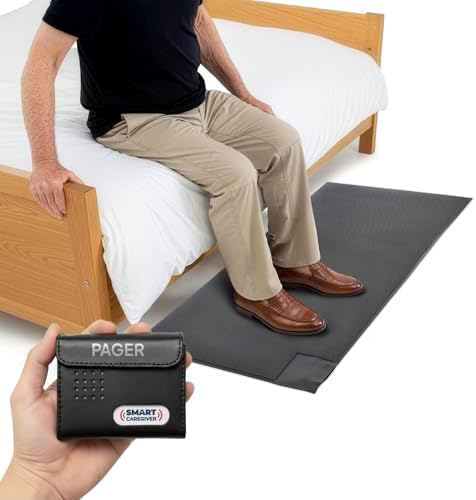
Smart Caregiver Floor Mat Alarm and Pager
$155.95 on Amazon as of Oct 14, 12:31 pm ET*
- 24 x 48 inch floor mat
- Alerts on first step
- Wireless pager
Best for: Restless sleepers
Check price on Amazon →Our rating is an editorial score based on safety, ease of use, comfort, value and verified customer feedback (see How We Review); it is not an Amazon customer rating. *Product prices and availability are accurate as of the date/time indicated and are subject to change; any price and availability information displayed on Amazon at the time of purchase will apply. As an Amazon Associate we earn from qualifying purchases.
Problems Bed Alarms Solve
Unassisted night-time exits that end in falls
The most dangerous moment is standing up from bed while drowsy or confused. A bed alarm alerts the caregiver as the person starts to get up, so someone can help them stand, walk to the bathroom or return to bed safely.
Wandering in people with dementia
People with Alzheimer's or other dementias may get up at night, become disoriented and wander through the house or even outside. An alert at bed exit gives the caregiver time to redirect them gently.
Caregiver exhaustion from constant listening
Without an alarm, many caregivers sleep lightly or not at all, checking repeatedly. A reliable alert lets them rest, knowing they'll be woken if needed. That rest matters for their health too.
Risks after hospital stays and with new medications
Weakness after illness, new sleep aids, blood pressure medicines and diuretics increase the risk of falling at night. A bed alarm is a useful temporary safety measure during recovery.
Replacing bed rails for confused people
For people with dementia, bed rails can cause entrapment or falls from greater height if they climb over. A bed alarm combined with a low bed is often a safer approach. See our guide to bed rails for elderly adults for details on rail risks.
Types of Bed Alarm Sensors
- Weight-sensing bed pads: placed under the sheet or on top of the mattress. They alarm when weight leaves the pad, ideally when the person sits up and shifts. These are the most common and give an early alert.
- Under-mattress pads: work the same way but go beneath the mattress, so they're invisible and can't be removed by the sleeper.
- Motion sensors: infrared sensors that detect movement near the bed. Inexpensive and simple, but may trigger with other movement in the room.
- Floor mats: alarm when someone steps on them beside the bed. They alert later than bed pads but don't react to tossing and turning.
How to Choose a Bed Alarm
How early do you need the alert?
If the person is very unsteady, choose a weight-sensing bed pad, which alerts as they rise. Floor mats only alarm once the feet are on the floor.
Where will the caregiver be?
Wireless pagers let the alert sound in the caregiver's room instead of at the bedside, which avoids startling the person. Check the stated range for your home.
Silent or audible at the bedside
A loud bedside alarm can frighten someone with dementia and increase agitation. Most caregivers prefer the alarm to sound only on the pager.
Comfort and acceptance
Some people dislike lying on a pad or try to remove it. Under-mattress sensors are invisible and avoid that problem.
Expandability
Some systems let you add a chair pad, useful for someone who also sits for long periods and tries to stand alone.
Power and batteries
Check what kind of batteries the pager and sensor use, and test them regularly.
The 5 Best Bed Alarms for the Elderly, Reviewed
1. Lunderg Wireless Early Alert Bed Alarm: Best Overall
Problem it solves: knowing early when a loved one is getting out of bed.
Lunderg has become one of the most popular bed alarm brands on Amazon. Its system uses a weight-sensing pad on the bed and a wireless pager for the caregiver, designed to alert early as the person begins to rise. Setup is simple, and the pager can be carried to another room so the alarm doesn't sound at the bedside.
- Key benefits: early alert, wireless pager, easy setup, widely used by families.
- Things to consider: pads can wear out with use and may need replacement over time.
- Best for: most home caregivers of seniors with fall risk or dementia.
2. Smart Caregiver Bed Exit Alarm with Wireless Pager: Best Support
Problem it solves: reliable bed exit alerts with accessible customer service.
Smart Caregiver has supplied fall-prevention alarms to care facilities and families for years and highlights its US-based company and customer service. This kit includes a weight-sensing bed pad and a wireless pager, so caregivers are alerted when the person gets up.
- Key benefits: established brand, wireless alert, customer support.
- Things to consider: slightly different setup steps than Lunderg; read the guide carefully.
- Best for: families who value support and a facility-tested brand.
3. Motion Sensor Bed Alarm with Caregiver Pager: Best Budget
Problem it solves: getting basic night-time alerts at a low cost.
This system uses a motion sensor aimed at the side of the bed and a caregiver pager with five volume levels. It costs a fraction of weight-sensing systems and can also be used at doorways to detect wandering.
- Key benefits: very affordable, flexible placement, adjustable volume.
- Things to consider: may trigger from pets, other people or blankets moving; less precise than bed pads.
- Best for: tight budgets and doorway alerts.
4. Lunderg Under Mattress Bed Alarm: Most Discreet
Problem it solves: people who remove or are bothered by sensor pads.
The sensor pad goes under the mattress, so the sleeper doesn't see or feel it. That's especially helpful for people with dementia who pull pads away, or for anyone who finds a pad uncomfortable. It works with a wireless alert like Lunderg's standard system.
- Key benefits: invisible, comfortable, harder to tamper with.
- Things to consider: higher price; check compatibility with your mattress type and thickness.
- Best for: people who reject visible pads.
5. Smart Caregiver Floor Mat Alarm and Pager: Best Floor Sensor
Problem it solves: false alarms from tossing and turning.
For restless sleepers, bed pads can trigger whenever they shift. A 24 x 48 inch floor mat beside the bed only alarms when someone steps on it, sending an alert to the wireless pager.
- Key benefits: no false alarms from movement in bed, durable mat, wireless pager.
- Things to consider: alerts later than a bed pad; the mat edge must lie flat to avoid tripping.
- Best for: restless sleepers who are steady enough to stand briefly.
Side-by-Side Comparison
| Alarm | Sensor | Alert timing | Best problem solved |
|---|---|---|---|
| Lunderg Wireless | Bed pad | Early | Getting up unassisted |
| Smart Caregiver Bed Exit | Bed pad | Early | Alerts with US support |
| Motion Sensor | Infrared motion | Varies with placement | Budget and doorways |
| Lunderg Under Mattress | Under-mattress pad | Early | Pad removal or discomfort |
| Smart Caregiver Floor Mat | Floor mat | On first step | False alarms from restlessness |
Building a Complete Night-Time Fall Prevention Plan
An alarm only helps if someone can respond quickly. Combine it with other measures:
- Lower the bed so feet rest flat on the floor when sitting on the edge.
- Light the path with motion-activated night lights from bed to bathroom.
- Make the bathroom safer with grab bars and a raised toilet seat.
- Manage nighttime incontinence to reduce urgent trips; washable bed pads protect the bed.
- Keep a walker or rollator next to the bed.
- Consider a medical alert device for times the person is alone; see our guide to medical alert systems.
- Review medications with the doctor, especially sleep aids and diuretics.
Night-time safety continues in the bathroom: a sturdy shower chair reduces the risk of falls during bathing, which is the other high-risk moment of the day.
Frequently Asked Questions
Do bed alarms prevent falls?
They don't stop someone from getting up, but they give caregivers time to help. Their effectiveness depends on a quick response and the other safety measures in place.
Are bed alarms a form of restraint?
No. They don't restrict movement; they only notify caregivers. Some care facilities limit audible alarms because noise can upset residents, which is why silent bedside setups with pagers are preferred.
How far does the wireless pager reach?
It depends on the model and on walls and floors in your home. Test the pager from the caregiver's bedroom before relying on it.
Does Medicare cover bed alarms?
Original Medicare generally doesn't cover bed alarms. Some Medicaid waiver programs and long-term care insurance policies may help.
Conclusion
A bed alarm solves a problem that keeps many caregivers awake: not knowing when a loved one gets up at night. By alerting early, it helps prevent falls, manage dementia-related wandering and lets the caregiver finally rest. For most families, the Lunderg Wireless Early Alert Bed Alarm is our top pick for its early warning and simple setup. If you value an established brand with US support, the Smart Caregiver Bed Exit Alarm is an excellent alternative. On a budget, the motion sensor alarm with pager covers the basics. For people who remove pads, the Lunderg Under Mattress sensor is invisible, and for restless sleepers, the Smart Caregiver Floor Mat avoids false alarms.
Test the system every night at first, keep spare batteries and combine the alarm with a safe path to the bathroom. For support with the emotional side of caring for a parent with dementia, visit our sister site Health & Heart Caregiver.
Related Guides
Best Books for Family Caregivers: 5 Must-Reads
Best Bed Rails for Elderly Adults: Safety-First Guide
Rollator vs Walker: Which Is Better for Seniors?
Best Medical Alert Systems for Seniors in 2026
This article is for general information only and is not medical advice. See our Medical Disclaimer and Affiliate Disclosure.