Many older adults take five, eight or even more medications a day, each with its own schedule. Doses get missed, pills get taken twice, and a simple weekly pill box stops being enough, especially when memory or vision starts to change. Medication mistakes are a common reason for avoidable hospital visits among seniors.
An automatic pill dispenser takes much of that risk away. It holds pre-sorted doses, sounds an alarm at the right time and releases only the pills that are due. Some models even alert caregivers by phone when a dose is missed. In this guide we explain the benefits, the main types, and compare five well-reviewed dispensers for every budget.
As an Amazon Associate we earn from qualifying purchases, at no extra cost to you.
How we chose: picks are based on manufacturer specifications, independent reviews and customer feedback. We did not receive free products. Prices and plans change, so confirm current terms before buying. Read our How We Review page.
Quick Picks: Best Automatic Pill Dispensers for Seniors
Our top 5 dispenser picks
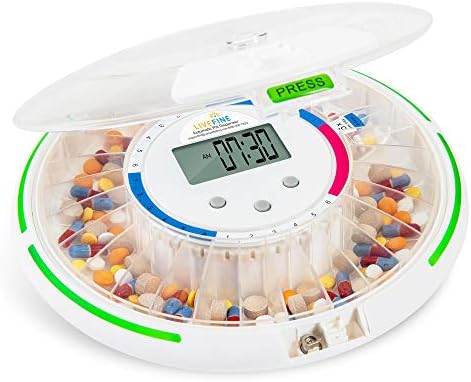
LiveFine Automatic Pill Dispenser
$76.49 on Amazon as of Oct 14, 12:31 pm ET*
- Up to 9 alarms a day
- Lockable cover
- No monthly fees
Best for: Stable schedules on a budget
Check price on Amazon →
Windtrace Automatic Pill Dispenser
$79.99 on Amazon as of Oct 14, 12:31 pm ET*
- 28-slot locking tray
- Extra-large LCD display
- Loud alarm and flashing light
Best for: Seniors with low vision or hearing
Check price on Amazon →Hero
- Holds 10 medications for 90 days
- Missed-dose app alerts
- Optional refill delivery
Best for: Complex routines, remote caregivers
See plans on official site →MedaCube
- Up to 16 medications
- Up to 20 dose times a day
- Remote schedule changes
Best for: Many medications or frequent changes
Check availability on Amazon →MedMinder
- Locking 28-compartment tray
- Calls when doses are missed
- Weekly adherence reports
Best for: Seniors living alone
See plans on official site →Our rating is an editorial score based on safety, ease of use, comfort, value and verified customer feedback (see How We Review); it is not an Amazon customer rating. *Product prices and availability are accurate as of the date/time indicated and are subject to change; any price and availability information displayed on Amazon at the time of purchase will apply. As an Amazon Associate we earn from qualifying purchases.
The Key Benefits of an Automatic Pill Dispenser
1. Fewer missed and double doses
Alarms remind the person when it is time, and locked compartments only open for the current dose, which helps prevent accidental double dosing, one of the most dangerous medication errors.
2. Independence for longer
Many seniors can manage their own medications with the right tool. A dispenser can delay the point at which someone needs a caregiver to hand them every dose.
3. Caregiver peace of mind
Connected models send a text or app alert if a dose is missed, so family members who live far away know whether medications were taken.
4. Less weekly work
Instead of sorting pills every few days, caregivers fill a dispenser once for up to a month, or longer with some smart models.
5. Better conversations with doctors
Adherence reports from smart dispensers give doctors real information about how medications are being taken, which helps them adjust treatment.
Types of Automatic Pill Dispensers
Rotating tray dispensers
A round tray with 28 compartments sits under a locked lid. At each dose time, the tray turns so one compartment lines up with the opening and an alarm sounds. These are affordable, with no monthly fee, but someone must sort the pills into each compartment.
Smart cartridge dispensers
Machines such as Hero and MedaCube hold bulk bottles of each medication and dispense the right combination automatically. They connect to apps, track adherence and alert caregivers, but cost more, either upfront or through a subscription.
Monitored service dispensers
Some companies combine a dispenser with a monitoring service that calls the user or caregiver when doses are missed, and may even handle pharmacy refills.
How to Choose a Pill Dispenser
- Number of daily doses: Make sure the dispenser supports every dose time in the schedule.
- Compartment size: Count the pills in the largest dose. Big vitamins and capsules take up space.
- Locking: A locked lid is essential for anyone with memory problems.
- Alerts: Decide whether you need caregiver notifications or only a local alarm.
- Power: Battery backup keeps alarms working during a power outage.
- Ease of use: Check that the user can actually tip, press or lift to get pills, especially with arthritis.
- Total cost: Compare a one-time purchase against monthly subscriptions over a year or two.
The 5 Best Automatic Pill Dispensers, Reviewed
1. LiveFine Automatic Pill Dispenser (Best Budget Pick)
LiveFine is one of the most popular low-cost automatic dispensers. It uses a 28-compartment rotating tray under a lockable cover and a large LCD screen.
- Price: under $100 for the standard model; a Wi-Fi model with a free app costs more
- Capacity: up to 28 days, with up to nine doses per day
- Alarms: up to nine a day, with a missed-dose alarm that keeps sounding for 30 minutes
- Power: plugs in or runs on AA batteries
- Locking: key-lock cover
Key benefits: Affordable with no monthly fees, simple to understand, and the lockable cover prevents early access to future doses.
Things to consider: The device must be tipped to release pills, which can be tricky for people with weak hands, and setting the dosage rings takes some learning.
Best for: Families on a budget with a stable medication schedule.
2. Windtrace Automatic Pill Dispenser (Best for Easy Reading)
Windtrace is one of the best-selling automatic dispensers on Amazon, with thousands of customer reviews. It was designed with older users in mind: big numbers, a loud alarm and a light that flashes when a dose is due.
- Price: around $80
- Capacity: 28-slot tray
- Security: each compartment stays locked until its scheduled time
- Display: extra-large LCD screen
- Reminders: loud alarm plus a bright flashing light
Key benefits: The large screen and strong audio and visual alerts make it easier for people with low vision or hearing loss to notice a dose and confirm the time. Locked compartments help prevent taking the next dose early.
Things to consider: There is no caregiver app, so family members will not get remote missed-dose alerts. Like other tray dispensers, someone still needs to sort the pills.
Best for: Seniors who live with a caregiver nearby and mainly need clear, hard-to-miss reminders.
3. Hero (Best Overall Smart Dispenser)
Hero is a countertop smart dispenser that holds bulk supplies of up to 10 medications and dispenses the right pills at the touch of a button. It is rented through a monthly membership rather than purchased.
- Price: monthly membership, lower when prepaid annually; an initiation fee may apply
- Capacity: up to 90 days of 10 medications
- Security: passcode protection
- Caregiver tools: app alerts for missed doses, refills and battery levels
Key benefits: Very little pill sorting, a strong caregiver app, optional refill delivery and 24/7 support. A trial period lets families test it first.
Things to consider: Ongoing subscription costs, and it is less suitable for liquid or soft medications.
Best for: Complex medication routines and long-distance caregivers.
Hero is sold directly by the company rather than on Amazon.
4. MedaCube (Most Customizable)
MedaCube is a premium, purchase-once dispenser built for complex regimens. It holds up to 16 medications and supports up to 20 dose times a day.
- Price: about $2,000 upfront, with no subscription
- Capacity: up to 90 days of 16 medications
- Security: locked, with tamper and tilt alerts
- Caregiver tools: text or email alerts and remote schedule changes through a web portal
- Power: replaceable 24-hour battery backup
Key benefits: Exceptional flexibility, remote control for caregivers and voice-recorded reminders from a loved one.
Things to consider: The high upfront price and a more involved setup.
Best for: People with many medications or frequent dose changes.
See details on official site →
5. MedMinder (Best Full-Service Monitoring)
MedMinder combines a 28-compartment locking dispenser with a monitoring service that can call the user and alert caregivers when doses are missed.
- Price: monthly subscription
- Capacity: 28 compartments
- Reminders: sounds, lights and phone calls
- Caregiver tools: weekly adherence reports
Key benefits: Multiple layers of reminders and detailed caregiver monitoring, with optional pharmacy refill services.
Things to consider: One of the most expensive options over time.
Best for: Seniors living alone who need close adherence monitoring.
MedMinder is sold directly by the company.
Side-by-Side Comparison
| Dispenser | Cost model | Capacity | Caregiver alerts |
|---|---|---|---|
| LiveFine | One-time, budget | 28 days, up to 9 doses/day | Wi-Fi model only |
| Windtrace | One-time, mid-range | 28 slots | No (local alarm and light) |
| Hero | Monthly membership | 90 days, 10 meds | Yes, app |
| MedaCube | One-time, premium | 90 days, 16 meds | Yes, text/email |
| MedMinder | Monthly subscription | 28 compartments | Yes, reports and calls |
Safety Tips for Managing Medications at Home
- Keep an up-to-date medication list, including vitamins and supplements, and bring it to every appointment.
- Ask the pharmacist to review all medications once a year to look for duplicates and interactions.
- Fill the dispenser at a clean, well-lit table, and double-check each compartment.
- Keep liquid medications, inhalers and refrigerated drugs on a separate reminder.
- Never split or crush pills to make them fit without asking the pharmacist first.
- If blood pressure medications are part of the routine, a validated home blood pressure monitor helps you and the doctor see whether the doses are working.
- Combine the dispenser with other safety tools, like a medical alert system, for seniors who live alone.
If memory is good and the routine is simple, a lower-cost weekly pill organizer may be all you need.
Frequently Asked Questions
Does Medicare cover automatic pill dispensers?
Original Medicare generally does not. Some Medicare Advantage plans, Medicaid waivers and long-term care insurance policies may help, so ask the plan directly.
Can a pill dispenser hold every type of medication?
Most handle tablets and capsules. Liquids, patches, inhalers, injections and very large or soft pills usually need separate management.
What if the person has dementia?
Choose a locked dispenser with loud alarms and caregiver alerts. In later stages, a caregiver may still need to supervise each dose.
Conclusion
An automatic pill dispenser is one of the most practical tools for keeping a loved one safe and independent at home. If you want an affordable, no-fee option, the LiveFine Automatic Pill Dispenser does the essentials well. The Windtrace Automatic Pill Dispenser adds an extra-large display and hard-to-miss alarms without a subscription. For families who want the most hands-off solution and strong caregiver alerts, Hero is our top smart pick, while MedaCube suits complex regimens with its high capacity and remote control. And for seniors who live alone and need close oversight, MedMinder adds full monitoring.
Choose based on the number of medications, the user's abilities and how much oversight your family needs, and review the medication list with a pharmacist. For support with the emotional side of caregiving, visit our sister site Health & Heart Caregiver.
Related Guides
Best Books for Family Caregivers: 5 Must-Reads
Best Blood Pressure Monitors for Home Use (2026)
Best Incontinence Underwear for Women: 5 Top Picks
Best Medical Alert Systems for Seniors in 2026
This article is for general information only and is not medical advice. See our Medical Disclaimer and Affiliate Disclosure.